The Labyrinth
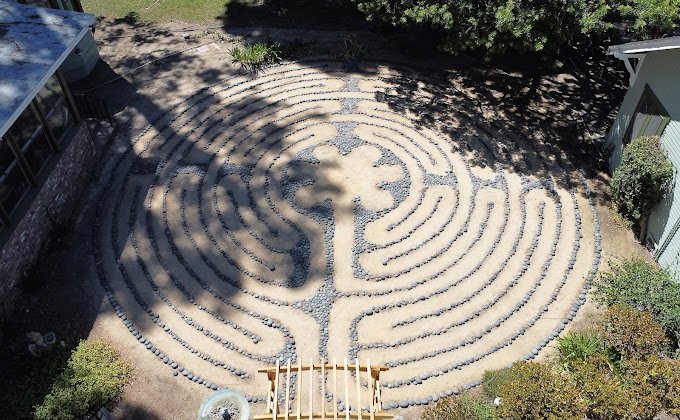
The labyrinth is an ancient tool for meditation. Unlike mazes, with their many entrances and dead ends, the labyrinth is a single, spiraling path. By following it to the center, you are able to quiet the mind and find peace and illumination at the center of your being. Thus, this physical structure constitutes a metaphor for your spiritual journey. The labyrinth image holds the experience of wholeness; it is a universal symbol of unity.
Labyrinths can be found in many religious traditions. The Kabbalah Tree of Life (of the Jewish mystical tradition) is an elongated figure based on the number eleven and continuing gates and pathways similar to the labyrinth. The Hopi Medicine Wheel, based on the number four, honors the Four Directions. The symbols found in Navajo sand paintings used in healing and other rituals are also part of the labyrinth tradition.
Our Story
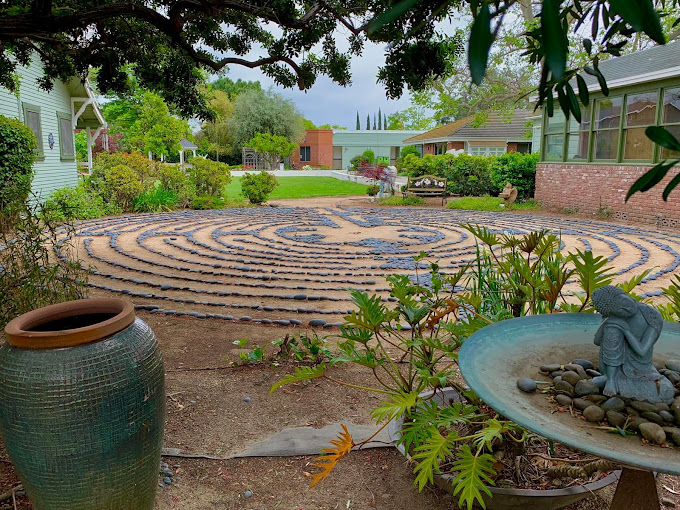
Our labyrinth here at the Meditation Gardens of Orange County, lovingly placed in 1997, is a classical, eleven-circuit path, that most well-known example of which is in the Cathedral of Chartes, in France. Our labyrinth is also a consecrated Medicine Wheel with the four directions marked by special stones.
Walking the Pathway:
One way to walk the labyrinth is to let all thought go and open yourself to experience whatever is there for you. Or you may consider a personal question, and then enter the pathway with an open heart to recieve answers and insights. Pausing at the entrance allows you to be fully conscious as you step onto the path. If there is someone ahead of you, let a moment pass before you begin. Once inside, simply step aside if you meet someone else along the way, then resume your walk. Each person’s experience is different, and every time you walk the labyrinth , staying carefully focused in the Now, the results will be different for you as well.
 Meditation Gardens of Orange County